Digital SAT Prep · Digital SAT Reading, Writing & Math
Expression of Ideas (Writing)
Revising text for rhetorical goals through rhetorical synthesis and transitions.
Seven concepts. Expression of Ideas is judged against the job the stem names — an italicized synthesis purpose or a transition relationship — read that job first, then pick the sentence or connector that matches it, not the one that sounds smartest.
- Digital SAT Prep
- Medium level
- 7 concepts
- 5 practice questions
1Goal-first revision
Rhetorical synthesis items state an italicized purpose — emphasize a similarity, introduce a topic to newcomers, present a benefit that offsets a drawback. Transition blanks in the same domain do not; they ask for a logical connector, not a purpose sentence. When a stem does name a purpose, the correct answer is the one that fulfills that exact purpose, not the most polished sentence or the one with the most facts. Accuracy alone is not enough; a true sentence that achieves a different goal is wrong.
Figure. Rhetorical synthesis is judged against the italicized purpose. A polished sentence that misses the goal loses to a plain sentence that hits it.
How it works
- Read the goalOn synthesis stems, find the italicized purpose and underline the key verb — emphasize, introduce, compare, contrast.
- Ignore polishDo not rank options by length or sophistication; a plain sentence that hits the goal beats an elegant one that misses it.
- Test each optionAsk only: does this choice accomplish the stated purpose? Reject any option that is accurate but targets a different rhetorical job.
Notes: "The novel won a major award. The novel sold poorly in its first year." Goal: emphasize a contrast between the novel's reception and its sales. Which sentence best meets the goal?
- The novel won a major award and was written by a debut author.
- Although the novel won a major award, it sold poorly in its first year.
- The novel sold poorly in its first year, as many debut novels do.
The goal asks for a contrast between reception and sales. Option B pairs the award with poor sales using "although." Option A mentions the award but adds an unrelated debut detail and never addresses sales. Option C discusses sales but drops the award entirely, so it cannot contrast reception with sales.
2Rhetorical synthesis method
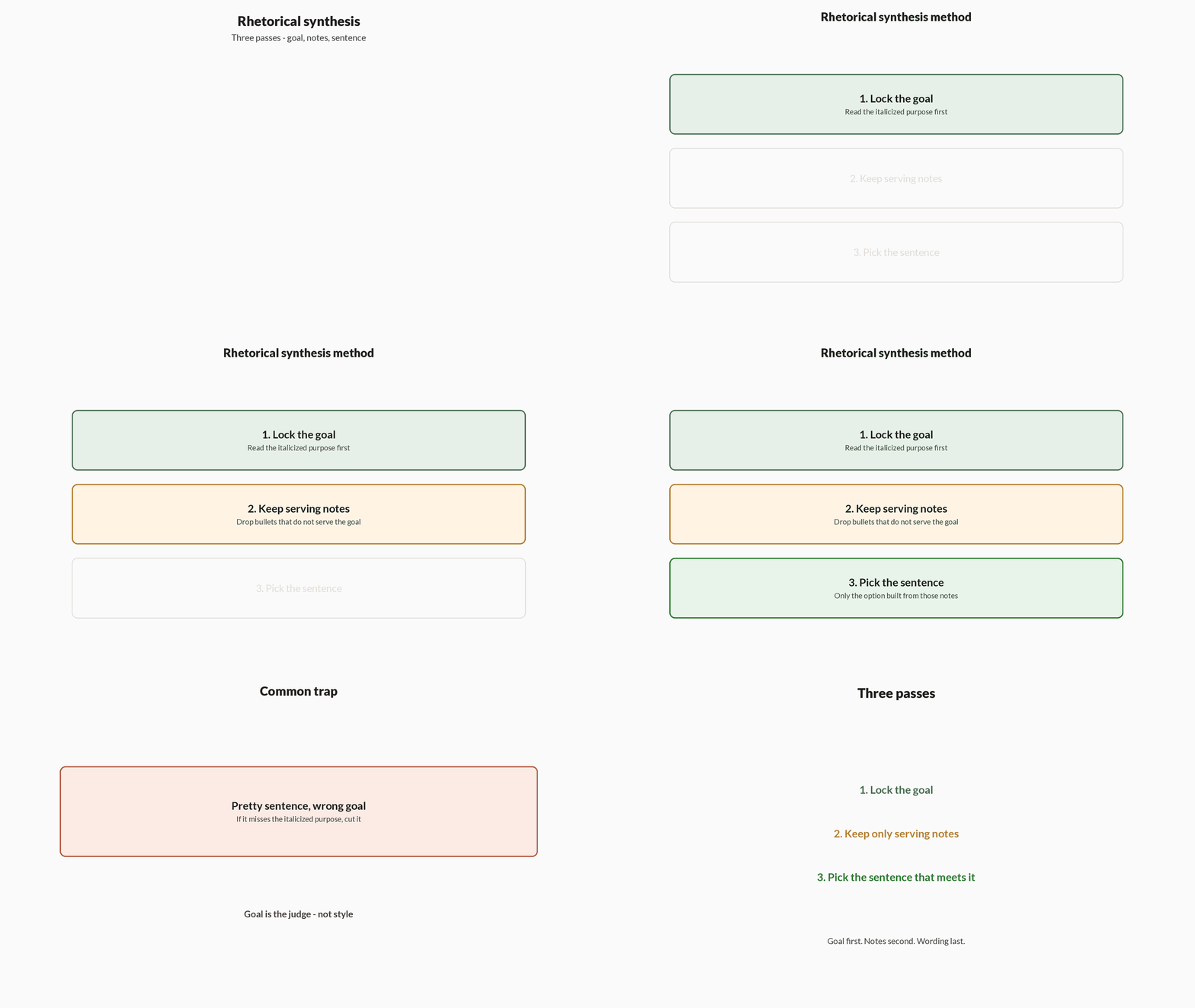
Rhetorical synthesis gives bulleted notes and a stated goal; you pick the sentence built from those notes that meets the goal. Work in three passes: lock the goal, select only the notes that serve it, then choose the option that combines just those notes without extra facts or a different rhetorical angle.
How it works
- Lock the goalRead the purpose sentence twice before scanning the notes — the goal filters which facts matter.
- Select notesMark only the bullets that directly support the goal; ignore accurate but irrelevant details.
- Match the optionPick the sentence that combines the marked notes and nothing else; reject options that import unmarked bullets or shift the rhetorical task.
| Trap | What it looks like | Why it fails |
|---|---|---|
| Extra detail | Adds a true note the goal never asked for | Relevance beats completeness |
| Wrong angle | Uses the right notes but emphasizes a difference when the goal asks for similarity | The goal verb decides, not the notes alone |
| Single-item dump | Mentions only one of two items when the goal requires comparison | Compare/contrast goals need both sides named |
Notes: "River A is 300 km long. River B is 300 km long. River A flows north. River B flows south." Goal: emphasize a similarity between the two rivers. Which sentence best meets the goal?
- River A flows north, while River B flows south.
- Both River A and River B are 300 kilometers long.
- River A and River B are two major rivers in the region.
The goal is similarity. Option B states a shared trait — equal length. Option A uses the flow-direction notes to stress a difference, which contradicts the goal even though both facts are true. Option C adds regional context that appears in none of the notes.
3Similarity and shared-trait goals
When the goal asks to emphasize a similarity, compare, or show what two items share, the answer must name a trait both items possess. A sentence that states one item alone, or that highlights a difference between them, fails even if every fact is correct.
Figure. A similarity goal needs a trait both items possess in one sentence. Naming one item alone, or highlighting a difference, fails the goal.
| Goal wording | Answer must | Reject when |
|---|---|---|
| emphasize a similarity | State one trait both items share | Only one item appears, or a contrast word sets them apart |
| compare the two studies | Name both studies and a point of overlap | The sentence discusses just one study |
| show what the paintings have in common | Place the shared feature in one clause covering both works | The sentence lists opposing traits |
Notes: "Study X found that exercise improved sleep quality. Study Y found that exercise improved sleep quality. Study X used college athletes. Study Y used office workers." Goal: emphasize what the two studies have in common. Which sentence best meets the goal?
- Study X used college athletes, whereas Study Y used office workers.
- Both Study X and Study Y found that exercise improved sleep quality.
- Study X found that exercise improved sleep quality in college athletes.
The goal targets a shared finding. Option B names the result both studies share. Option A correctly contrasts participant pools — a difference, not a similarity. Option C reports only Study X, so it cannot show what the two studies have in common.
4Difference and contrast goals
When the goal asks to emphasize a difference, contrast two works, or show how items diverge, the answer must place opposing facts about both items in the same sentence. Listing one item's trait without the other's opposing trait leaves the contrast unstated.
Figure. A difference goal needs opposing facts about both items in the same sentence. A one-sided list of one item's traits does not contrast.
How it works
- Pair the notesFind the two bullets that pull in opposite directions — warm vs cool palette, north vs south flow, high cost vs low cost.
- Name both sidesThe sentence must reference each item; a contrast goal never settles for half the pair.
- Signal the splitUse while, whereas, by contrast, or unlike so the reader sees the opposition the goal demands.
Notes: "Painting X uses bright warm colors. Painting Y uses muted cool tones. Painting X depicts a cityscape. Painting Y depicts a seascape." Goal: emphasize the difference between the two paintings. Which sentence best meets the goal?
- Painting X uses bright warm colors and depicts a cityscape.
- While Painting X uses bright warm colors, Painting Y uses muted cool tones.
- Both Painting X and Painting Y are displayed in the national gallery.
The goal is difference. Option B contrasts the opposing color palettes and names both paintings. Option A describes only Painting X. Option C asserts a shared display location — a similarity the notes do not even provide.
5Four transition relationships
Transition items join two sentences with a blank connector. Before reading choices, decide whether the second sentence adds to the first, contrasts with it, follows as a result, or illustrates it with an example. The connector must express that relationship — a contrast word is wrong whenever the two ideas agree.
Figure. Before reading connectors, classify the second sentence as addition, contrast, result, or example. The class kills whole families of wrong transitions.
| Relationship | Second sentence does | Examples |
|---|---|---|
| Addition | Adds a related point in the same direction | moreover, in addition, furthermore |
| Contrast | Pulls against the first idea | however, nevertheless, by contrast, on the other hand |
| Cause / effect | States a result of the first idea | therefore, consequently, as a result, thus |
| Example | Gives a specific instance of the first idea | for example, for instance |
"The new policy shortened average commute times. ______, it reduced fuel costs for the city." Which connector best fits the blank?
- However
- Therefore
- In addition
Both sentences describe benefits of the same policy — the second adds another upside, not a reversal or a caused result. "In addition" signals addition. "However" and "Therefore" imply contrast and causation respectively, neither of which matches two parallel benefits.
6Name the relationship first
Cover the answer choices, read both sentences, and name the relationship in one word — addition, contrast, cause, or example. Only then uncover the options and eliminate any connector that expresses a different relationship. When two choices share the same meaning, they cancel each other out and neither can be the sole correct answer.
Figure. Cover the options, name the relationship in one word, then uncover and eliminate any connector that expresses a different relation.
How it works
- Cover choicesHide the options so tone or familiarity cannot bias you toward a connector.
- Summarize each sentenceState what sentence 1 claims and what sentence 2 adds — agreement, reversal, result, or instance.
- Match and eliminatePick the connector class you named; cross out options from the other three classes.
"The drug reduced symptoms in most trial participants. ______, a small subgroup experienced no improvement at all." Which connector best fits the blank?
- Therefore
- For example
- However
Sentence 1 reports broad success; sentence 2 reports an exception — the relationship is contrast. "However" signals that reversal. "Therefore" treats the subgroup as a caused result of broad success. "For example" treats the subgroup as an illustration of success, which contradicts "no improvement at all."
7Concision without losing the goal
When more than one option meets the stated goal, prefer the one that accomplishes it without importing irrelevant facts. Longer sentences often fail because they smuggle in extra notes that distract from the rhetorical task — not because short answers are always better on their own.
Figure. When two options meet the stated goal, prefer the one that does not import irrelevant notes. Length is not style — it is often smuggled content.
How it works
- Filter by goalEliminate every option that misses the purpose; concision applies only among survivors.
- Strip extrasReject survivors that add accurate but unmarked notes — awards, dates, side facts the goal never requested.
- Keep the leanest fitAmong equally goal-aligned choices, take the shortest sentence that still names every required item.
Notes: "Solar panels cost more upfront. Solar panels lower electricity bills over time. Solar panels require minimal maintenance." Goal: present a benefit that offsets the upfront cost. Which sentence best meets the goal?
- Although solar panels cost more upfront, they lower electricity bills over time.
- Solar panels cost more upfront, lower electricity bills over time, and require minimal maintenance.
- Solar panels require minimal maintenance and are made from silicon.
The goal pairs one drawback with one offsetting benefit. Option A acknowledges upfront cost and names the bill savings — nothing extra. Option B adds maintenance, which the goal never asked for. Option C ignores upfront cost entirely and introduces silicon, an unmarked note.
Notes
- Rhetorical Synthesis: You are given bulleted notes and a stated goal (e.g., 'emphasize a similarity'); the correct answer uses relevant notes to meet that exact goal.
- Transitions: The connector must match the logical relationship between two sentences—addition, contrast, cause, or example—based on their actual content.
- Goal Focus: Every Expression of Ideas answer is judged against the italicized purpose in the stem, so re-read the goal before evaluating options.
- Concision and Relevance: Prefer the choice that accomplishes the goal without adding irrelevant facts, even if longer options sound sophisticated.
Formulas
- Synthesis method: underline the goal, find the notes that serve it, then pick the option that combines only those notes.
- Contrast transitions: however, nevertheless, by contrast, on the other hand.
- Cause/effect transitions: therefore, consequently, as a result, thus.
- Addition/example transitions: moreover, in addition, for instance, for example.
Exam traps & shortcuts
- For synthesis questions, ignore how 'nice' a sentence sounds and check only whether it fulfills the stated rhetorical goal.
- For transitions, cover the choices, define the relationship between the two sentences in your own words, then pick the matching connector.
- Eliminate transition options that all mean the same thing—the outlier that expresses a different relationship is often the tested answer.
Reference tables
Match the connector class to the relationship you named before looking at choices.
| Class | Job | Connectors |
|---|---|---|
| Contrast | Second idea opposes the first | however, nevertheless, by contrast, on the other hand |
| Cause / effect | Second idea follows from the first | therefore, consequently, as a result, thus |
| Addition | Second idea extends the first in the same direction | moreover, in addition, furthermore, also |
| Example | Second idea illustrates the first | for example, for instance |
Recap
Read only this the night before.
- Goal first
- On synthesis stems, the italicized purpose is the judge — a true sentence that hits a different goal is wrong.
- Synthesis
- Lock the goal, mark serving notes, reject extras — similarity needs a shared trait; difference needs both sides opposed.
- Transitions
- Name the relationship before uncovering choices — contrast words fail when the two ideas agree.
- Elimination
- Two connectors with the same meaning cannot both be correct; eliminate the whole class that mismatches.
- Concision
- Among goal-aligned options, drop the ones that smuggle in unmarked notes — length is not sophistication.
Practise Expression of Ideas (Writing)
Reading is free and needs no account. Practice, mocks and progress live in the app.
- 5 exam-style questions on this topic, with explanations
- A 6-question practice set that ends the chapter
- Timed mocks scored with the real marking scheme
- Readiness tracked per topic, kept on your device